Sunday, September 15, 2019

Viability of Glacier Grafting Tested

Increased carbon dioxide (CO2) emissions have led to a dramatic increase in ocean acidification since oceans absorb approximately a quarter of the world’s CO2 emissions. Melting glaciers further add to the problem by disrupting ocean current patterns and increasing salinity. This impacts everything, from marine organisms to crop yields. Water conservation is an effective means of reducing CO2 emissions; can glacier growing work? 

Carbon dioxide reacts with seawater to form carbonic acid which causes acidification of seawater. Since the beginning of the industrial revolution, humans have added approximately 400 billion tons of carbon to the atmosphere resulting in a 0.1 pH drop in the ocean. While this value may appear small, such a drop in pH translates to an astonishing 25% increase in acidity since the pH scale is logarithmic. 

The rapid speed of acidification deprives marine organisms of time to adapt thereby weakening corals, softening the shells of scallops, slowing the molting of crabs, confusing fish with diverse smells and more. 

Melting glaciers and icebergs release freshwater initially reducing salinity of the surrounding sea. Consequently, seawater becomes less dense which influences ocean current patterns. This, along with atmospheric changes are contributing factors to oceans’ increasing salinity despite increased glacial melting. Water salinity and shortages are two of the largest environmental constraints that crops have to face in the climate change scenario.

To increase their supply of fresh water, the local people of northern Pakistan have been grafting glaciers for over 100 years. The aim is to "grow" ice at high altitudes in the winter to increase meltwater for crop irrigation during the summer. The practice begins in the autumn, where a dozen local men climb to shaded areas above the snow line with 300kg of glacial ice and pots of Indus River water (approx. 120 kg), as well as other ingredients like saw dust, wheat husk, charcoal and salt. These ingredients are placed in a cave or depression and covered with soil. 

Glacier growth is slow and affected by a multitude of factors. Viability studies on this practice began in 2005 but due to the nature of glacier growth, it is too soon to draw any conclusive evidence on its effectiveness. However, according to the locals, these grafting techniques are the only solution to late summer water shortages in their villages. 

Saturday, August 31, 2019

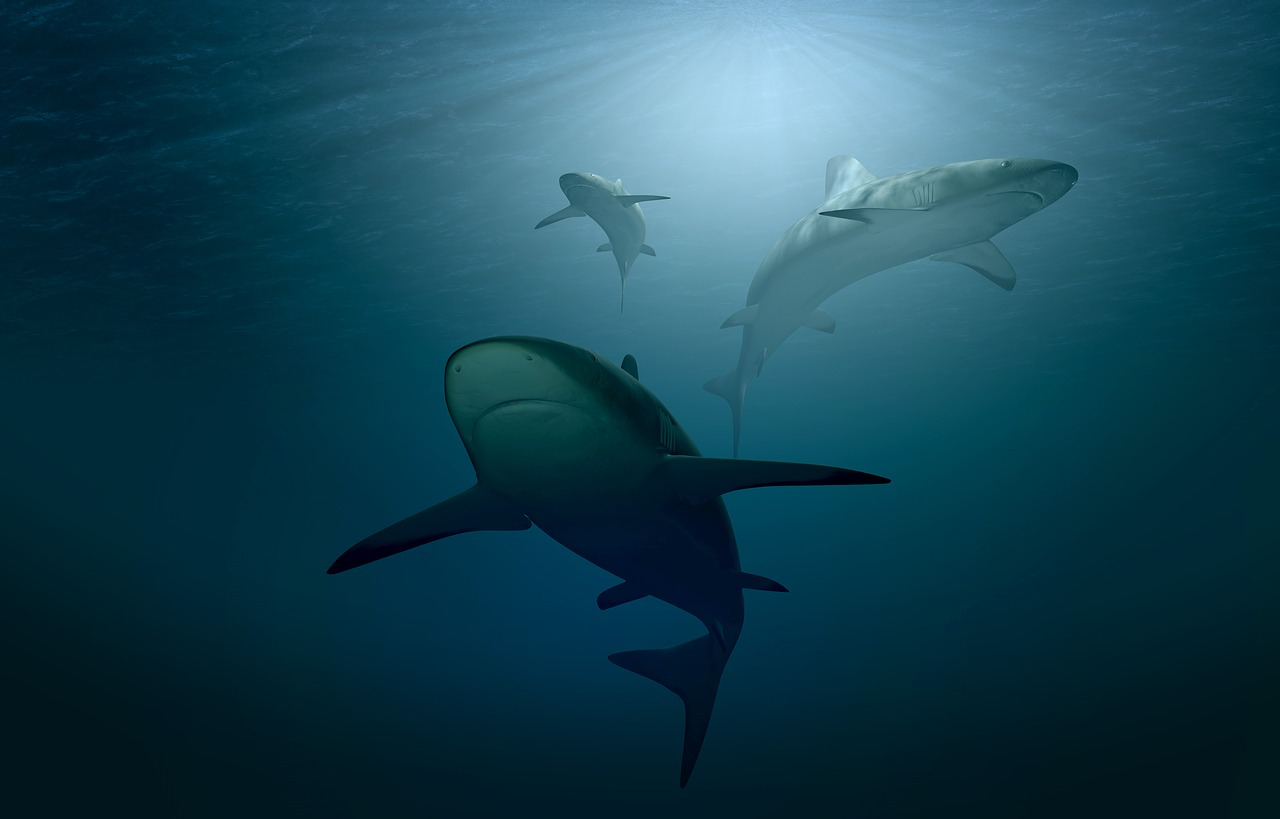
Sharks may hold the Cure for Cancer

Great White Sharks May Hold the Cure to Cancer

From the cinematic Jaws series and the multiple incidents that have taken place in the beaches of Florida, sharks have been known as one of the world’s most dangerous marine creatures. However, though these creatures can be of great harm to humans when provoked in water, they can indirectly be helpful to aid human health.


From immense research collected by scientists from Southeastern California University, sharks actually hold the medicinal properties that may cure cancer and aid aging illnesses in humans. Now, what do sharks have, that humans don’t have in order to cure diseases? 


According to BBC news, the director of the Save Our Seas Shark Research Centre and the Guy Harvey Research Institute at Nova Southeastern University, Dr. Mahmood Shivji, a great white shark has the remarkable ability to repair its own DNA. Its genome is 1.5 times bigger than an average human’s genome, meaning that it has about 4.63 billion base pairs. Notably, according to an article in The Chronicle Herald, 60% of a shark’s genome has repeat gene sequences and about 30% of them are composed of a special type of DNA called “LINEs” which are commonly known as “jumping genes”. These are special genes that can replicate themselves and produce copies that are known to “jump” around and insert themselves into variable genomes. 


Many of the special genes that were observed in a shark’s genome, were thought to maintain genome stability repairing DNA and containing key tumor suppressing genes. According to Dr. Shivji, this phenomena was the result of evolutionary change sharks experienced. Dr. Shivji had said that these genes are “enriched” rather than ordinary due to special sequence changes that could help repair wounds. Research shows that since sharks have no bones,  cells of their immune system are readily available in the bloodstream and as such, antibodies are better able to infiltrate tissue and therefore reach the disease faster.


Furthermore, researchers of the Guy Harvey Institute bring to attention that sharks are endangered species and so, scientific research should be kept ethical while exploring a shark's body; sharks should not be killed for the sole purpose of creating medicine that could cure diseases. 


Moreover, the public have brought up questions on whether shark cartilage can be incorporated into health supplements. However, scientists have said that further research is still yet to be done for this to happen. According to an article written by Charles Bryant on www.animal.howstuffworks.com, a study from 2005 was done on mice and humans where oral shark cartilage was incorporated in a supplement which caused the side effects of nausea and diarrhea. It is also important to consider that shark cartilage contains mercury. 


Therefore, research is still in progress in regards to sharks and their medicinal properties, so it is important to consider that solutions are in exploration and there are further more discoveries yet to be made with alternative species. 


Sources


Wednesday, August 28, 2019

Virtual Private Networks

Image result for vpns

As more and more people use the internet all over the world, many users begin to question the security of their public information. There is a multitude of ways to protect online information such as only visiting trusted websites and making your passwords hard to guess. However, people can still track your internet address and find what you have been doing on the internet. Internet addresses (IP addresses) are given to every device and network that can connect to the internet. They allow for internet sites to know which users are accessing them and where to send information to. Virtual private networks (VPNs) are one way to protect your internet address and privacy.

There are two types of internet protocol addresses (IP address). The first is a private IP address, which is the address that is given by your router at home to its devices such as computers, printers, TVs, and phones. A private address is connected only to your personal router and can only be accessed by your network. Private addresses usually begin with 192.168 and are followed by two more numbers. The other type of IP address is the public IP address. This is used to interact with the internet. An ISP (Internet Service Provider) assigns a public address to every router and can be easily found by typing “What is my IP address” into a Google search engine. Since a public address is needed to do any form of interaction with the internet, people can access and track it. VPNs are one way to protect a public address.

VPNs encrypt data to hide your IP and location. This keeps data secure and private. They do this by creating what is known as a tunnel protocol to transfer data packets and act as a security layer. This is especially important in public hotspots and places where lots of people are using a Wi-Fi network at the same time. Public Wi-Fi networks allow almost anyone to connect, making it vulnerable for anyone to hack. 

VPNs can be used to connect to a private server. Many large corporations use VPNs to allow employees to connect to their work server so that they can access it and do work while on the go or even at home. VPNs can also change your location by connecting to servers in other countries. This allows for users to access blocked sites such as social media or even watch streams that are locked to a specific geographical location. 
   
Software like VNC and Cisco AnyConnect can allow users to connect to other private networks such as work servers. Public VPNs such as ExpressVPN, NordVPN and Private Internet Access can be used by almost anyone to protect their personal internet usage. There are many options available for the general public to use to help protect internet data, so that no matter where you are in the world, you can be safe. 

Info sourced from: Techopedia, Linus Media Group
Image sourced from: HowStuffWorks

Sunday, August 25, 2019

Discovery of New Pain Organ


Karolinska Institutet researchers have found a new pain organ that can help scientists to better understand the process of how pain is experienced and processed by our body. More specifically, this organ is particularly responsive to pain originating from pressure and pricks, otherwise referred to as mechanical pain. 

This organ, termed as the nociceptive glio-neural complex, is a sensory receptor organ that is comprised of a collection of glial cells. This organ rests in between the skin’s outer and inner layers. The glial cells themselves contain protrusions that stem into the outer layer of the skin. 

The functionality of this organ was tested in mice, and it was observed that deactivating the nociceptive glio-neural complex resulted in the mice experiencing less pain from pricks and pressure, suggesting that this organ in fact does play a major role in the processing of mechanical pain. 

Although this organ is yet to be discovered in humans, it may help scientists to further develop their understanding on how our body interprets pain stimuli. It was previously thought that mechanical pain originated exclusively from nociceptive fibres. However, from this new finding this type of pain may very well start from the glio-neural complex instead. 


Read more about the discovery on the Karolinska Institutet website:
National Geographic article:


Wednesday, August 21, 2019

Science of The Dancing Parrot


It was August of 2007 when a parrot named Snowball was left at a rescue centre in Dyer, Indiana. Soon after, the parrot became a YouTube sensation because of its amazing dancing skills, catching the attention of millions, including neuroscientists.The concept of dancing as seen in humans cannot be seen in most species, but parrots are the exception. In fact, parrots and humans are the only species that connect with music by showing a variety of spontaneous movements. These movements might be due to the fact that parrots are vocal learners with auditory-motor connections in their nervous system.


So far, research has shown the synchrony between the music beat and a parrot’s head and/or feet movement. Researchers wanted to see more of Snowball so they exposed him to new music once in a while such that now, he has 14 diverse dance movements like swinging his head, making half circles, doing headbangs, etc.


Parrots can acquire these  movements through various ways, such as imitation or copying humans. If dancing by imitation is the case, it is interesting to note that parrots might realize and distinguish the difference in body shapes between themselves and humans and still copy the motor movements of dance.
As well, dance movements might be a product of the parrots’ creativity. Animals other than humans usually show creativity upon a physical benefit like accessing food or mates. However, Snowball uses dancing to communicate with his human caregivers, without any food or mating opportunity present.


Read the full article by Atlantic here:
https://www.theatlantic.com/science/archive/2019/07/what-snowball-dancing-parrot-tells-us-about-dance/593428/

Read the full research paper by Current Biology here:
https://www.sciencedirect.com/science/article/abs/pii/S0960982219306049

Image Credit: Atlantic

Sunday, August 18, 2019

The Objective Truth About the Microwave


Microwaves are magic. They transform frozen blocks into mouth watering food. Meals that would otherwise take hours to cook can be nuked to desired temperatures in just minutes. A microwave, magic aside, is a simple device. It’s a box that shoots waves at a frequency of approximately 2.45 gigahertz which translates to a wavelength of approximately 12 cm. The waves at this specific frequency are absorbed by water, fats, and sugars to create heat so plates and bowls are not heated. That’s it.


This year marks the 52nd anniversary of the microwave oven. The first countertop microwave was sold in 1967 for $495. Expensive, yes, but it was the latest prototype of a device that once weighed 750 pounds and sold for $5,000 in 1946. By the mid 1980s, microwaves could be found in 25% of U.S. households, quickly rising to a whopping 90% in 1997. 


The original story is quite simple: the rising radar needs of WWII demanded for faster production of the magnetron (i.e. devices that generated radio waves) and so, engineer Percy Spencer redesigned the device so that its components could be punched out from sheet metal rather than each part needing to be individually machined which allowed mass production of magnetrons.
While working one day, he noticed that a candy bar in his pocket had started to melt and suspected that waves from the magnetron were causing this. So to verify his theory, he pointed the radar beam at a raw egg - the egg exploded from rapid heating. Another experiment with corn kernels showed that radio waves could quickly make popcorn. A patent soon followed and the Radarange was born.

This mysterious little box is practically in every household, let’s hope this article did justice in demystifying its history and workings.

Friday, August 16, 2019

TESS Discovers a New Class of Exoplanet

Credit: NASA

Although exoplanetary astronomy may be a relatively young scientific field, over 4 000 exoplanets are known today. From this vast set of data, scientists have been able to determine that there are general classes which almost every exoplanet falls into, such as Super-Earth, Mini-Neptune, and Hot Jupiter. However, recent observations by NASA’s TESS (Transiting Exoplanet Survey Satellite) have identified a completely new class of exoplanet: the Ultrahot Neptune.

Astronomer James Jenkins reported the discovery of the planet in question, LTT 9779b, at the TESS Science Conference on July 29th. The planet was first identified as a candidate using TESS, and subsequent observations were conducted by HARPS (High Accuracy Radial Velocity Planet Searcher). LTT 9779b orbits the star LTT 9779, a sun-like and high metallicity star situated around 260 light years from our solar system. Thanks to these observations, astronomers were able to determine that the planet orbits its host star in a mere 19 hours, which places it extremely close to the star. Further measurements determined that the planet has a radius of 4.6 Earth radii, and a mass of 29.3 Earth masses. This positions it firmly in the Neptune-like category of planets, but it is the first such Neptune-like planet to be discovered so close to its star.

Interestingly, it appears that hardly any planets with Neptune-like mass have orbits of four days or fewer around their star. Rather, the most commonly-found planets this close to their star are Super-Earths, or planets with masses greater than that of Jupiter. These results, plus the proximity of the planet causing it to have a temperature around 2000 kelvins, categorizes LTT 9779b as a planet in the Neptunian desert. This collection of traits has never been observed before, and thus, the Ultrahot Neptune class is born.

Studying LTT 9779b will provide crucial insights into the existence of the Neptunian desert, and the evolution of gas planets. Current theories seem to suggest that gas planets often form farther out from their star, then move closer in over time. As the planet migrates nearer to its star, its orbital period decreases, and its temperature greatly increases. Furthermore, the decreasing distance between the planet and the star results in an increase in the concentration of solar wind particles, and the star slowly strips the planet of its atmosphere. Scientists hypothesize that the Neptunian desert exists because Jupiter-like planets migrate extremely close to their stars, stripping off their atmospheres, and leaving behind only a rocky core. This suggests that the newly discovered Ultrahot Neptune is perhaps a transitionary phase from Hot Jupiter to Super-Earth.

The next steps for research are to determine the rate at which LTT 9779b is losing mass due to its star. If the rate at which it loses mass is fast on astronomical time scales, then perhaps this is the reason no other Ultrahot Neptunes have been discovered until now: they simply exist for too short a time.


Read the presentation abstract here: https://tsc.mit.edu/docs/Talk_Abstracts.pdf